
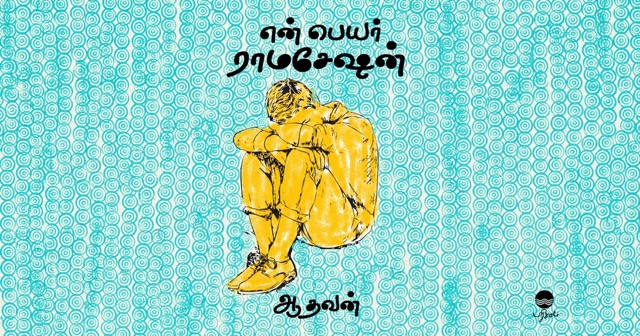
There is a stretch of life that falls between being a child and feeling like an actual adult. Aadavan’s En Peyar Ramaseshan (“My Name Is Ramaseshan”) is a novel about living inside that uncertainty. First published more than forty years ago, it remains one of the most perceptive Tamil novels written about youth, self-consciousness, and the uneasy process of becoming an adult.
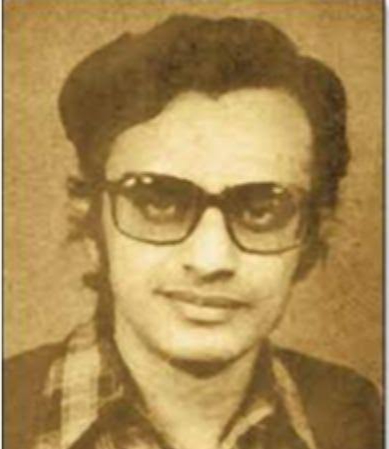
Aadavan began writing in the 1960s, when urban India was changing faster than people had language for. Young men arriving in cities were confronting forms of modern life their fathers had never encountered, often without emotional or cultural models to help them navigate those changes. Aadavan approached this world indirectly. Rather than building his fiction around ideological conflict or dramatic plots, he focused on small moments: an awkward conversation, a passing embarrassment, a private hesitation. From those seemingly minor incidents, larger psychological pressures slowly emerged. What makes his fiction distinctive is the precision with which he records uncertainty, especially the confused inner lives of people trying to understand themselves while already being shaped by the world around them.
The novel follows Ramaseshan, a college student from a modest background who goes by Ram among friends. Ram notices everything around him, though what to do with those observations is often less clear to him. During college he becomes close to two very different friends: Rao, who comes from a wealthier and more cosmopolitan background, and Moorthy, who is endlessly and haplessly romantic. He also falls in love with Rao’s sister Mala. Aadavan patiently builds these relationships and the emotional tensions hidden within them. What begins as a novel about friendship, romance, and youthful self-consciousness gradually widens into something larger, as Ram finds himself drawn toward questions about art, cinema, class, love, and adulthood itself.
One of Aadavan’s most distinctive qualities as a writer is the way contradiction remains alive inside his characters. Aadavan himself once wrote that whenever an important question arose in his mind, two voices would emerge at the same time, one arguing for and one against, and that he felt compelled to defend both sides. That tension runs through much of his fiction. Characters move back and forth between opposing emotions with startling ease. Affection turns into irritation, certainty into self-doubt, resentment into sympathy. Aadavan is less interested in resolving these contradictions than in observing how naturally the mind moves between them. Many of his finest scenes unfold in precisely those unstable moments, when people have not yet fully decided what they feel, and conflicting interpretations still seem equally true
The novel’s three love stories are its spine. The first, between Ram and Mala, is a study in how class difference gets expressed politely, in small moments, until it adds up to something that can’t be ignored. Ram grew up with chutney and Carnatic music; Mala grew up with fruit jellies and Western pop. When the relationship starts to wear on him, Ram catches himself cataloguing her condescensions. The way her questions seem to nudge at his background. The way she softens when he talks about things she doesn’t know, as if patting a child on the head. She, for her part, finds him rigid and humorless. Neither reads the other entirely wrong. At one point Ram reflects that his own horizons, unlike Mala’s, are bounded by ragas and taalas and the food on his family’s table. Ram experiences this as honesty about himself. Aadavan quietly allows the reader to see the resentment beneath it as well.
Ram’s relationship with Prema carries a different kind of tension. The two argue in the way people argue when they find each other interesting but won’t fully admit it. The tension between them comes less from background or social discomfort than from mutual scrutiny. Both of them see each other’s flaws with uncomfortable clarity. About their own, they are almost entirely in the dark
Then there is Moorthy, who handles love the way some people handle hobbies. His daily updates about the girl he likes are less about her than about the version of himself he gets to perform for his friends. From the outside, his romance often seems to exist more vividly in narration than in reality. Moorthy’s storyline is the funniest part of the novel and also, quietly, one of Aadavan’s sharpest observations about the way young people turn love into a form of self-dramatization.
What ultimately holds the novel together is Ram’s slowly changing perception of his father. At the beginning, the man exists mostly at the edges of Ram’s life, someone he regards with mild embarrassment and emotional distance. Over the course of a few understated encounters, that perception begins to shift. The habits and limitations Ram once dismissed as personal failures begin to look different to him, less like weakness than like earlier versions of the compromises slowly forming around Ram himself. Aadavan handles this movement without sentimentality or dramatic reconciliation. Ram does not arrive at a sudden revelation. He simply begins, somewhat against his own will, to recognize parts of his future in the life he had assumed belonged only to his father.
The novel’s one genuine limitation is also one of Aadavan’s broader habits. He is extraordinarily good at recording the moment just before understanding arrives, but he tends to stop there. Readers who want the novel to push past observation into reckoning will occasionally feel the absence of that next step.
What has kept En Peyar Ramaseshan in circulation for four decades is that it leaves its questions open. The novel ends the way young adulthood ends: not with an answer, but with the slow realization that you’ve already started living the life you were trying to decide about. Aadavan died in his forties, before he had the chance to write the book that might have grown from this one. It is the kind of novel that doesn’t leave you when you close it, which is, in the end, the only thing that matters.