
The first thing Ashokamitran gives you is a teenage boy on a bicycle, quietly relieved to find that both tires still have air. No grand gestures, no hero striding into the frame, no signal that something important is about to begin. From that small, ordinary opening, The Eighteenth Parallel builds, quietly and with great patience. It turns into something harder to name than a historical novel and more lasting than most of them.
The novel is set in Hyderabad between 1946 and 1948, in the years when the Nizam’s princely state held out against joining either India or Pakistan after partition. The boy at the center of things is Chandrasekaran, known to everyone as Chandru, a Tamil-speaking college student living in the railway colony of Secunderabad. He is not interested in politics. He is interested in cricket, in the texture of the city’s streets, and, with gathering urgency, in girls. Around him, the world is quietly coming apart.
What makes the novel remarkable is the method Ashokamitran uses to show this. He does not give us battle reports or the deliberations of statesmen. He gives us a market. In the Monda market, the neighborhood bazaar, goods from outside Hyderabad slowly disappear. First, variety shrinks. Then the crowds thin. Then shops close. By the time the Razakars, the Nizam’s private militia, begin their campaigns of intimidation, the market’s transformation has already told us everything we need to know about how power reshapes daily life long before it reaches for the gun.
The novel insists that history is not something that happens to people from above but something that accumulates inside the ordinary textures of life: who walks home with whom at night, who asks why you are spending time with those boys. The official version taught in schools is clean and simple: a Muslim ruler refused to join India; the people wanted otherwise; the army stepped in; the matter was settled. Ashokamitran gives you something harder to summarize. He gives you the vague smell of cooking oil hanging over a city, because that is what the vehicles were running on after the economic blockade. He gives you a boy checking his bicycle tires. He gives you the small, daily weight of life continuing inside an enormous crisis.
The novel was written in 1977, during the Emergency declaration in India. Ashokamitran notes in his preface that history has been understood as something to be received with skepticism for at least two thousand years. He says this quietly and moves on. The novel is structured with unusual discipline. The chapters switch between two voices, the author’s, older and wiser, reflecting back on what happened, and Chandru’s, caught up in the moment, seeing only as much as a teenager in the middle of it all can see. Reading them together reveals something the novel never states directly. Chandru’s inner life and the political situation around him develop at exactly the same pace, each clarifying the other. As he moves from cheerful indifference toward a reluctant seriousness, the city moves from uneasy coexistence toward open violence.
The language is spare and precise. Ashokamitran was described by his peers as a writer’s writer, and in this debut you can see why. He does not use six words where three will do. A housing colony is fixed in your mind in six sentences and never leaves it. A cricket match doubles as political geography. The humor, when it arrives, arrives exactly when the narrative needs relief from its own weight, like a window opened in a closed room. The ball bowled from Secunderabad arcs toward Karachi, intercepted by a Delhi man, sent on to Africa. It is a funny image and then, a moment later, it is not funny at all.
The novel refuses to take sides along religious lines, and instead observes how certainty hardens on both sides. The Nizam’s position is given its own logic. The Razakars are not simply monsters. Sayyed Mama, a Tamil man who arrives in Hyderabad in his sixties and throws himself into the Nizam’s cause, is comic and frightening in equal measure, a man who has made up his mind so completely that no fact can reach him. His counterpart, Narsimha Rao, a Indian nationalist equally certain of his righteousness, is written about with the same clear-eyed honesty. Both men have decided that everyone on the other side is simply an ignorant fool. The novel does not argue with either of them. It simply lets you watch, and leaves you to ask how many people you know who resemble each of them, and which one, on a bad day, you might resemble yourself.
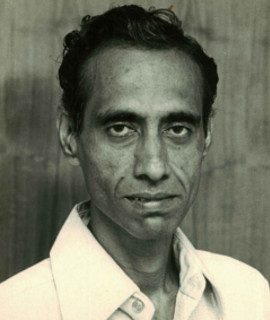
Chandru’s arc is the real subject of the book. He begins as a boy who wants nothing more than to play cricket and avoid trouble. By the end, he is harder to define. He has seen violence from both sides. He has understood that the people most hurt by communal hatred are always the ones with nothing to protect. And when the crowd turns violent, he walks away. Not because he is a coward, but because he has seen clearly what that fury costs. His inner life is written about honestly, and Ashokamitran never talks down to him. His adolescent confusions are not mocked or tidied up.
The Eighteenth Parallel was Ashokamitran’s first novel. It already shows you, clearly, what kind of writer he intended to be. For him, realism is not a style. It is a way of seeing. Look plainly at what is in front of you. Do not make things more dramatic or more consoling than they are. Trust that ordinary life, described honestly, will carry everything important inside it. He does this with the steadiness of a writer who has been at it for years. Which makes it all the stranger that this was only the beginning.
Much fiction about historical violence reaches for grand emotion and large gestures. This novel does neither, and is better for it. A kite can fly very high, and it is still tethered by a string in your hand. Ashokamitran understood both the height and the string.