

Peichi – The Depths of Love, The Heights of Fury
Ramasamy, who comes to understand his own femininity as an expression of maternal instinct, develops a deep attachment to Olammal. Seeing in her the form of his mother, he becomes
Ramasamy, who comes to understand his own femininity as an expression of maternal instinct, develops a deep attachment to Olammal. Seeing in her the form of his mother, he becomes

In the opening pages, an absent-minded Senthil panics upon momentarily losing Varshini at a clinic. In the final pages, both Senthil and Ramya frantically search for her after she goes missing from a tour bus. Beneath the second search lies a darker possibility

Vengaivanam is ambitious to the point of excess. Its dynasties, wars, love stories, hunting parties, forest officers, tigers, and poaching networks sometimes crowd the reader’s field of vision. Yet the scale is integral to its achievement. The novel does not offer a decorative tiger placed inside human history

Were the lives lost across three decades just a statistic? Does dying for a cause make death more meaningful? The novel searches for meaning in the lives of ordinary people who lost entire generations, and asks what, exactly, remains in those who survived.

Because of a lifestyle that bears daily witness to the grandeur, mercy, and cruelty of nature, these men have possessed, for generations, a personality filled with faith in God, a sense of adventure, and comradeship and trust toward fellow humans. They are like Hemingway’s Santiago, an aging Cuban fisherman, says these words during a grueling, multi-day battle with a giant marlin.

This exchange grants the reader a useful freedom: to enjoy the myth without either fully believing or fully dismissing it, to sit with the stories without having to defend whether they really happened. The novel thrives on this latitude. It can treat the underworld as a psychological landscape in one chapter and as a place of real adventure in another, without one reading canceling the other

Chandra Thangaraj’s novella, Yellow Faces That Emerged from a Dream,searches for answers to these very questions. In this work, of about a hundred pages, Chandra presents the adolescence of a woman named Leela through her “dream-spaces of time.” At the beginning of the novel,
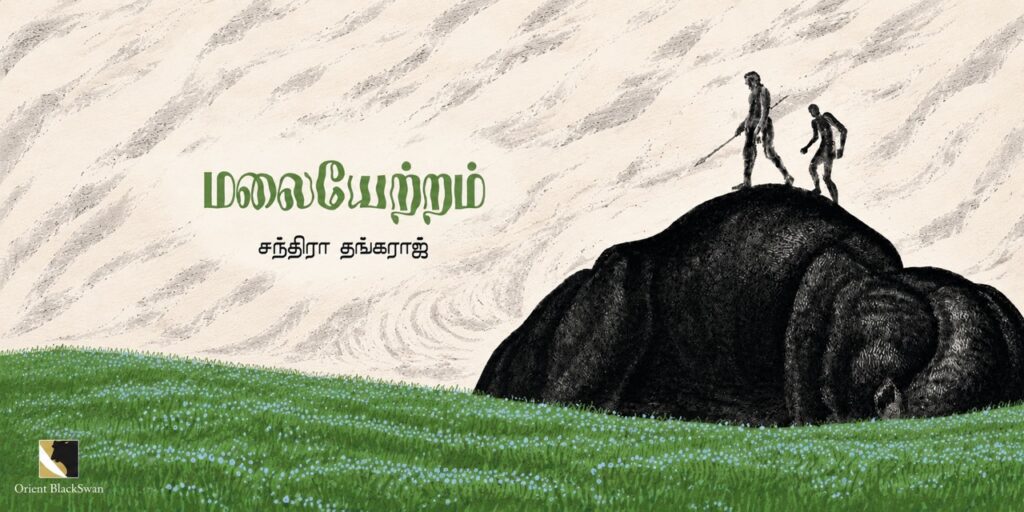
As Rasapandi ascends, the external landscape prompts him to retreat inward. Memory and reality alternate, and this relentless memory shapes both perspective and emotion—it persists on its own accord…

Beyond the Priyadhara River, beyond forests dense with poisonous growth, lies a city guarded by ascetics whose very presence seems dangerous. More people drown attempting to reach it than ever arrive. To some, the city may not exist at all. Perhaps it was imagined by those desperate enough to need it. Like any fortified settlement of the fifth century, the city has a moat. But it is filled not with water, but with white liquid sand.
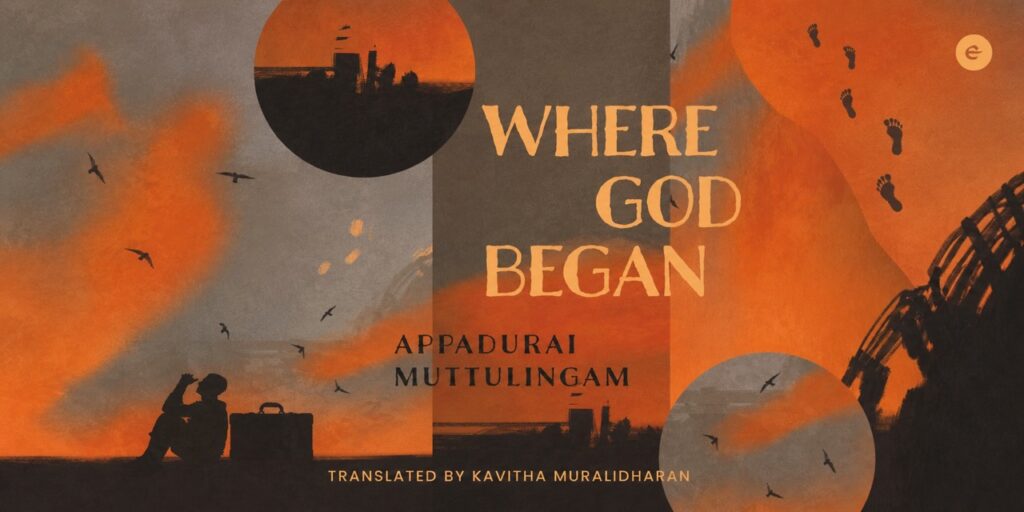
The novel’s most profound strength is that none of these characters are reduced to a single note. There is a Nishant who, early on, refuses to rinse his own plate, yet later works the dish pit in a diner.