
The Tamil poet Deva Devan was once asked why he kept writing about fallen leaves. He said it was because the leaves seemed to be trying to tell him something. That answer has stayed with me. It is also the only honest answer to why we keep returning to certain books. Siddhartha is one of them. On every reading, it seems to be trying to tell you something you almost understood the last time.
Most readers sense something unusual about this novel without quite naming it. It reads less like fiction than like a poem that has agreed to wear narrative clothing. Hermann Hesse understood this, and he used it deliberately. The result is a book whose meaning shifts with the reader. The same sentences yield different light depending on where you are in life, the way a river’s surface changes depending on where you stand.
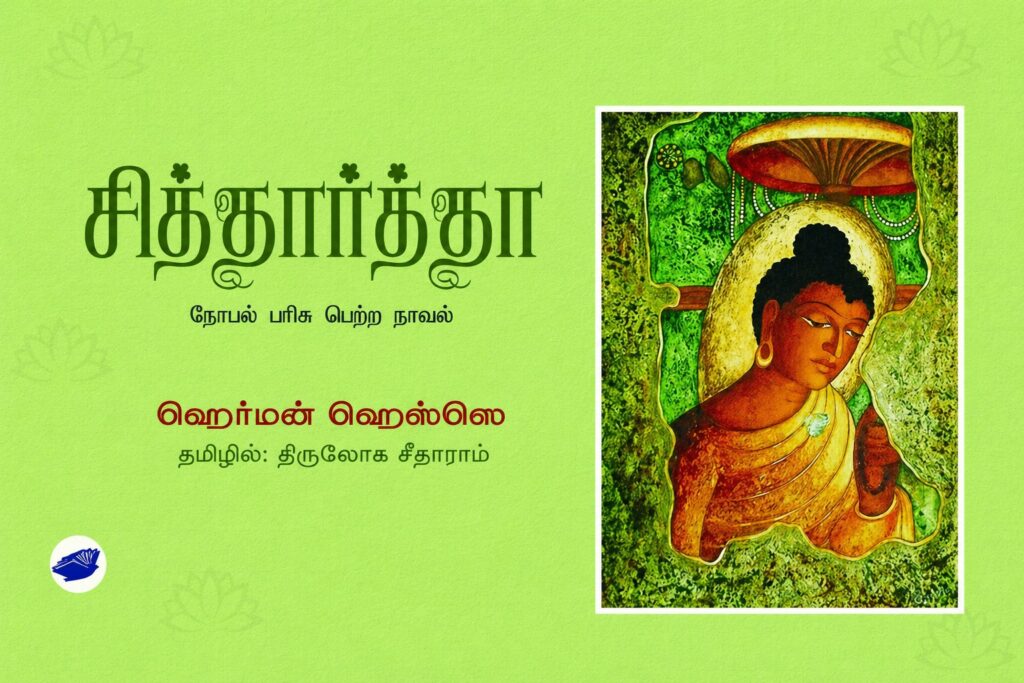
The novel’s first image seems like a backdrop. By the end, you realize it was the entire story. Siddhartha grows up beside a river, in the shade of a mango grove, with his loyal friend Govinda always near. A boy who begins beside a river will one day become a ferryman on one. And it is a ferryman, not a priest, not a philosopher, not even the Buddha, who finally teaches him what knowledge cannot. Hesse plants the entire arc of the novel in its first breath. The hope is that these themes will only be understood on the second reading. That is the quiet gamble of all serious fiction.
The book’s central argument is this: wisdom cannot be taught. It can only be lived into. Siddhartha learns this first through failure. His years among the Samanas, enduring hunger and silence and bodily austerity, produce a man of formidable self-discipline and almost no self-knowledge. He can suppress the ego through practice. The ego returns the moment practice ends. The self is not destroyed. It is only postponed.
This is where Hesse is most honest, and most uncomfortable. The very desire to arrive, to attain, to finally understand, is itself the obstacle. Siddhartha’s error is not that he seeks too little but that he seeks too deliberately, turning inward experience into an intellectual project. Books, Hesse implies, carry the same danger. They can hand us knowledge. Wisdom must come from somewhere else.
Where it comes from is genuinely surprising. Not from the Buddha, whose teachings Siddhartha respectfully declines. Not from Kamala, the courtesan who educates him in desire. And yet it is Kamala who, near the novel’s end, attains something like peace before either Siddhartha or Govinda does. She does it through renunciation, giving up wealth, beauty, and pride one by one until there is nothing left to protect. Hesse gives the novel’s most quietly radical act to a woman the plot has long treated as peripheral. But even she is not the answer.
It comes from Vasudeva, a humble ferryman.
The three modes of awakening that close the novel are its most poetically precise achievement. Kamala arrives through sight, the vision of the Buddha’s face. Govinda arrives through touch, a kiss on Siddhartha’s forehead that collapses time and selfhood at once. Siddhartha himself arrives through listening, years on the riverbank, attending to the water the way one might attend to a great teacher who speaks only in metaphor. The ferryman Vasudeva never lectures. He simply rows, and listens, and one afternoon walks into the forest without ceremony. He is Hesse’s image of the ideal: a man so fully present to the world that the world has nothing left to teach him.
The novel’s treatment of time, carried entirely by the river, is the passage most readers remember longest. The river exists at its source and its mouth simultaneously, in the waterfall and in the still pool, in every moment at once. What Hesse is saying, quietly, is that the present moment is not a point on a line but the whole river at once. The past and future are habits of attention, not facts about reality.
Here is what Siddhartha will not tell you, but what any honest reader eventually admits. While you are inside it, something loosens. You feel for these characters a patience and an openness you do not always manage with actual people. You accept them as they are. Then you put the book down and go back to being yourself. The self that Siddhartha spends a lifetime trying to dissolve returns in you after a single afternoon. Hesse knew this would happen. It is precisely his point. A book can show you the river. It cannot teach you to listen to it. That work, if it gets done at all, happens somewhere outside the page, in the unremarkable hours the novel never depicts.