
In 2026, wars are being fought over maritime trade routes. The Strait of Hormuz affects what ends up on a kitchen table in rural Tamil Nadu. But this connection between global trade and daily life is not new. Literature has always understood it better than policy has.
There are two ways to write history in literature.
The first is Eliot’s way. The Waste Land pulls the whole of human civilization into one poem: ancient Sanskrit, Greek myth, Elizabethan England, Buddhist scripture, the streets of London, Dante’s hell. Eliot is not writing about one event or one culture. He is showing all of human civilization as exhausted and broken. You feel the world first. The individual appears inside it.
The second is Auden’s way. In Musée des Beaux Arts, Icarus has already fallen, his legs disappearing into the sea while a farmer keeps plowing and a ship sails on, and nobody stops. History does not announce itself. It just happens while everything else continues.
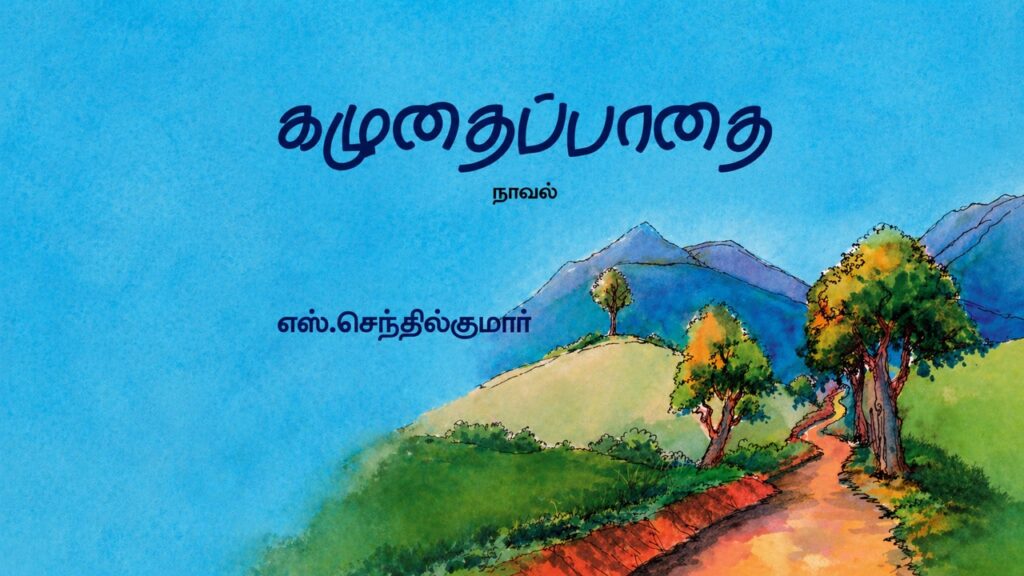
S. Senthil Kumar’s Kazhudhaipaadhai roughly, “The Donkey Path” , follows the second tradition. It is a Tamil novel set in the Western Ghats in the late nineteenth century. It is about trade routes. How they formed, how they grew, and what they cost the people who built them. But the novel never states this directly. History arrives quietly, inside lives that are already in motion.
The novel shows two contrasting women. The first is Vellaiyammaḷ, held against her will by a man named Muthusamy. He controls all the commerce on the mountain. He has a hundred men, land, and authority over the entire region. He believes this authority extends to people as well. His official wife, Nagavalli, had once loved someone else but chose Muthusamy for his wealth and security. Vellaiyammaḷ eventually frees herself. What she does ends Muthusamy’s life and brings down his entire operation. The donkey path comes into existence because of her act. Senthil Kumar does not make this point explicitly. He does not need to.
Nagavalli’s story is quieter but just as painful. After Muthusamy’s death, she goes looking for Sadiyan, the man she had loved before. She searches for years. Then she stops. Not because the love is gone, but because she worries her past could bring danger to him. She protects him by disappearing from his life. There is no resolution. Only the grief of a woman who made one wrong choice early and spent the rest of her life living with it.
The middle of the novel belongs to two brothers, Suppanna and Moovanna. Their stories open and close the narrative. What tears them apart is not hatred or rivalry. It is longing strong enough to override judgment and destroy trust. The people who cause this rupture are not villains. They are people with needs their community cannot name. The novel suggests that the clan’s rules exist for a reason. When longing has nowhere honest to go, it destroys what it loves most.
The next generation carries what the previous one could not resolve. A young man moves through the novel with a love rooted in grief. He cannot act on it. He becomes the living result of his father’s generation, not through fate, but through what gets passed down when people cannot let go.
Where the novel loses its footing is in how it handles its outsiders. The salt traders and the schoolmasters who come into the mountains from outside stand apart from the clan’s moral world. But instead of being drawn with the same ambiguity as the characters who belong to that world, they are flattened into emblems of goodness, benevolent, uncomplicated, free of the contradictions that make everyone else in the novel feel real. The insider characters are rendered with full human complexity: desire, betrayal, grief, and complicity all running together. The outsiders are rendered as ideals. This split, some characters carrying the weight of the modern novel, others lifted into allegory ,works against the unity the book otherwise achieves. A novel committed to showing how history moves through ordinary lives cannot afford to exempt any of its people from that same pressure.
The prose is steady throughout. Senthil Kumar writes in the dialects and oral rhythms of the Western Ghats. The language feels native to the place, not observed from outside. The novel’s final sequence, a wildfire consuming the mountain, is its best writing. Personal loss and collective disaster happen at the same time. Each makes the other worse. It has the scale of an epic while staying rooted in specific human lives. Trade routes carry produce from hills and goods from ground. Kazhudhaipaadhai asks what else they carry. The answer is longing , longing that has nowhere clean to go. One man’s appetite started everything. The donkey path exists because a woman refused the life he forced on her. Everyone who walks it afterward carries her refusal without knowing it. The path ends. The weight does not.