
Osho once said that Adam leaves his Garden of Eden, wanders, loses his way, and then one day returns home. The one who was Adam when he set out becomes Jesus the moment he finally turns back toward home. Adam is the first man; Jesus is the last. Adam is the beginning, Jesus is the end, and there a circle completes itself.
These words fit the protagonist of the novel Sikandi in a remarkably close way.
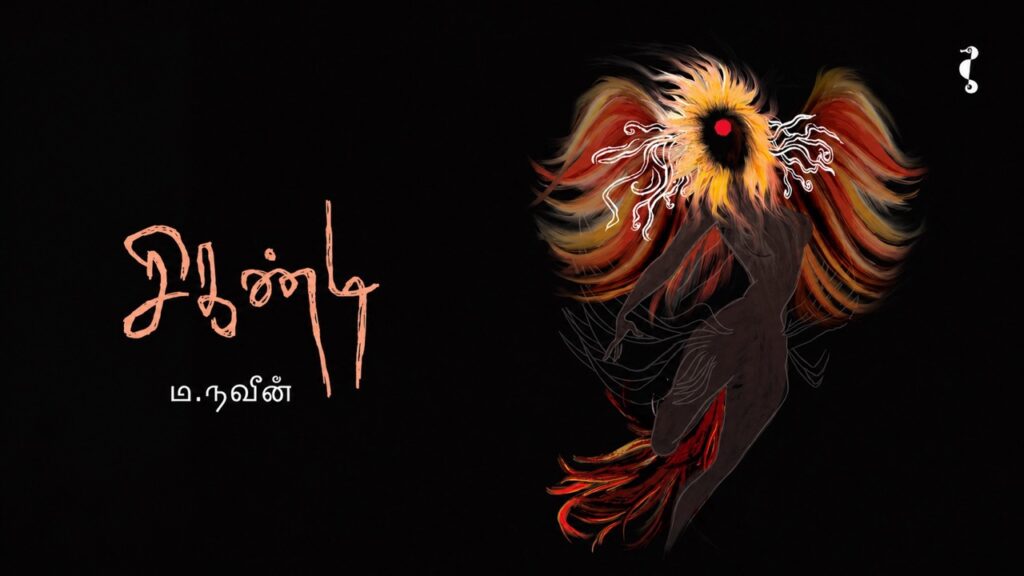
The story moves back and forth along the path of fifteen-year-old Deepan, who storms out of his house after a fight with his mother. From Loonas, he takes refuge at his maternal uncle’s home and gradually gets pulled into the dark underworld operating in Sauwaad and Karat Bazaar, drawn in by his desires and greed. Along the way, he falls for Sara, a transgender woman, believing her to be a girl. When he eventually discovers the truth, he tries to push her away. What follows is the story of how he loses his sense of manhood, the dark road he takes to reclaim it, and where that road ultimately leads him.
A piece of writing is truly great when it gives the reader the experience of living a life they have never lived, in a place they have never been, by placing themselves inside the skin of someone entirely different. Not every work offers that. There are books we read from a safe distance, observing without ever entering. But reading Sikandi, the possibility is real: you can live inside it as Deepan, as Sara, as Ebu, as Nishaamma.
The foundation of this novel is Ebu. She is a towering figure, a living image of Bahucharaa Mata, the goddess who protects her roosters. As a thaayammakai, a spiritual elder among transgender people, she underwent castration and fully established herself as a woman. In Sauwaad, she welcomes transgender individuals who come to her for help, assisting them through their transitions and helping them build the lives they want for themselves.
The punishment Bahucharaa Mata inflicts on those who deceive her roosters is fierce and particular. Ebu, as her human embodiment, protects the transgender women under her care with that same ferocity. A leader who protects the marginalized has a code of their own. Even a ruler, when their people face a true threat, must fight back and, if necessary, destroy that threat. That is the kind of person Ebu is.
Sara calls Ebu “Amma,” meaning mother, and calls Nishaamma “Chinnamma,” meaning little mother. The name Ebu itself means mother, and to every transgender person who seeks shelter with her, that is exactly what she is.
Through the lives of its transgender characters, the novel quietly makes a larger argument: you do not need to be a woman or carry a child in your womb to earn the quality of motherhood. Motherhood is a feeling, and when that feeling rises in a man, it is still called motherhood, still belonging to the feminine. Ebu, Nishaamma, and Sara all stand as proof of this.
Just as Ebu mirrors Bahucharaa Mata, Sara mirrors Guan Yin, the goddess of compassion and mercy. Sara never throws away broken things. With her own hands, she pieces them back together and breathes new life into them. In every broken object, she seems to see herself, and by giving those objects a new form, she quietly resurrects herself. A person with a heart like that cannot bring herself to punish Deepan.
The fact that Sara performs her apsara dance for Deepan, the same dance she reserves only for her god, reveals the depth of her love for him more than any words could.
I find myself most afraid, in this world, of people who know how to forgive. People whose very souls have been crushed, not just their bodies, and who remain willing to forgive. When asked how many times a person should be forgiven, Jesus answered: seventy times seven.
Only Sonya could offer Raskolnikov forgiveness and redemption. Maslova says that only by forgiving Nekhlyudov can she reclaim herself. In the same way, only Sara can offer Deepan the forgiveness and redemption he needs. Near the end of the novel, when Deepan confesses, “I come here just to kill you?”, Sara makes a decision in that moment to protect his soul from being stained beyond repair. In that act, she becomes an angel. She restores his manhood to him, and in doing so, she proves herself to be both apsara and Guan Yin.
At this point, the novel made me genuinely wonder whether a human being can love another person completely in real life.
But that is precisely the freedom a novel quietly gives us. Becoming Sara, I was able to love Deepan without conditions. I was able to forgive him.
And yet, even if a daughter forgives the man who tried to destroy her, a mother cannot. Neither Ebu nor Nishaamma can forgive Deepan, not even slightly.
It is generally easy to stand on the side of those who have been wronged. Throughout the novel, the dark world of Sauwaad and Karat Bazaar and the difficult lives of its transgender characters are laid out in full. And still, the character who affected me most as a reader was Deepan.
He leaves home, takes refuge with his uncle, and step by step becomes a street vendor hawking stolen goods, then a brothel guard, then a drug dealer, sinking deeper and deeper into the underworld surrounding the transgender community. Then at a certain point he tries to break free, to pull himself out of all that darkness and get back home. But midway through his escape, he stops. He stands still and asks himself what he is really running from. That is the moment he turns inward rather than outward. As he peels back the layers of darkness within himself one by one, he hears a sound at the very bottom: “k’kaavaa.” It is the voice of his friend’s younger sister, a girl with a developmental disability, for whom every emotion and every language reduces to that single sound. Even when Deepan violated her, the only sound she made was “k’kaavaa.”
Can any of us hold onto the innocence we had at birth? Yes, but only until Adam takes the apple. In that sense, Deepan feels to me like a vessel that holds the full range of what it means to be human. His image in the novel keeps shifting between darkness and light.
The same boy who stormed out in rage at his mother aches for her throughout. He believes with complete certainty that simply being held in her arms and receiving her forgiveness would be enough to save him.
The darkness inside him is what drives him to have violent sex with a sick, weakened girl at the brothel. The light inside him is the small moment of compassion he shows her, pausing to notice she is suffering. When he wrestles with the reality of Sara, unable to reconcile the woman and the man he finds within her, I felt only pity for him. Watching him practice for the act of killing Sara, convincing himself it is the only way out, filled me with a quiet dread. The way he killed a small black monkey. The moment he killed Kannan’s cat, the cat Kannan played with every single day, and then hid under his blanket with a contemptuous smirk. That moment filled me with bitterness toward him. I found myself asking how much cruelty could be bottled up inside one person, and then in the very next moment I could see Deepan who felt genuine remorse when he thought of Kannan grieving for his cat.
Near the end, before fleeing the city, he makes sure to pay off his uncle’s debt, doing it for Kannan’s sake, before he goes.
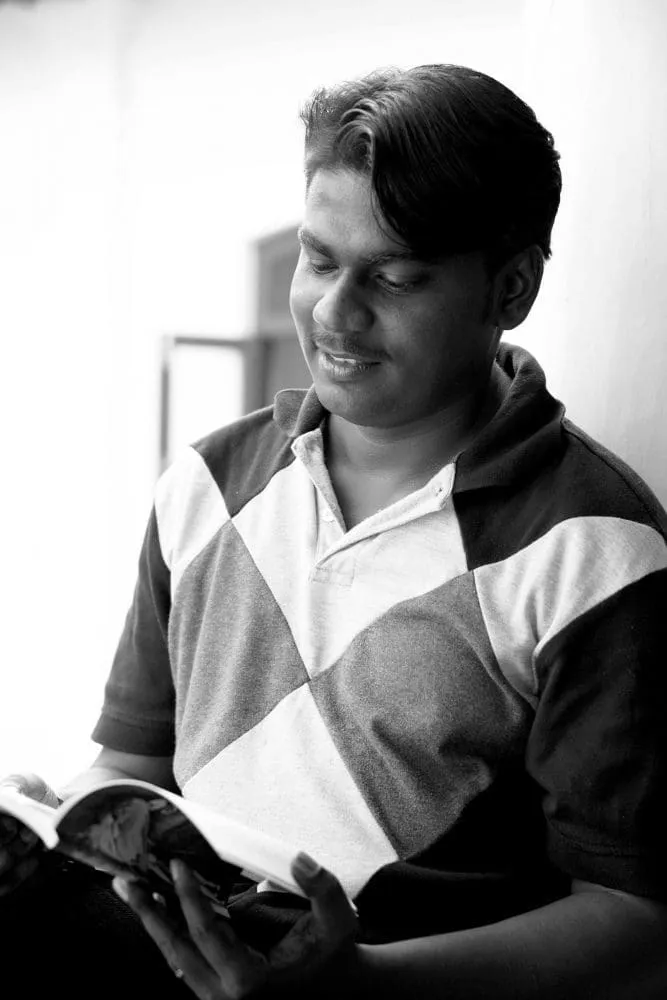
I found myself wondering why author Navin chose to write Deepan’s story in the first person. Ordinarily we would take that voice to be the author’s own. But in this novel, I believe that choice is a challenge Navin is issuing directly to his readers.
Is everything Deepan experienced only a reflection of the darkness within himself? Don’t all of us carry those same dark corners and locked rooms inside us? That, I believe, is the real dare Navin extends through Deepan’s character.
We do not need to announce our inner darkness to the world. But the least we can do is test ourselves, to see whether we have the courage to turn inward and look honestly at what is there, even just once. If you can resist the escape of saying “that’s just the author’s voice” and instead step fully into Deepan’s skin when you enter Sikandi, then I believe seeing your own darkness becomes possible too.
Su. Venugopal’s novella Balconies, centered on transgender life, stands as one of the most significant milestones in Tamil literature. From that point, Navin’s Sikandi is a tremendous leap forward.
In California, there is a place called Death Valley National Park, covering 3.4 million acres and home to countless rare mountains sculpted by nature in every color and shape, rising vast and wide across the landscape. Among them are the Black Mountains at Badwater Basin. The blackness of those mountains unsettled something deep in me. That enormous, dense darkness was more than I could take in. The mountains sat there as though they had absorbed every last fragment of darkness this world has ever produced. The longer I stared, the more unnamed feelings rose in me, waves I could not control, swelling and moving on without stopping. I could not bear that much darkness. Sikandi has spread through me in exactly the same way, as that same darkness, that same feeling, that same weight.
In the end, as Osho said, the one who left home as Adam can only return as Jesus. That is also exactly where this novel leaves us.