
Literature never emerges in isolation. A novel may appear to tell the story of individuals, or to describe the life of a particular street, but the deeper forces that shape its characters, their fears, their language, their ambitions and limits, are always determined by history. Fiction may not directly narrate political events, colonial transformations, or social reforms; yet those historical frameworks define the possibilities available to its characters. Readers who approach literature without a sense of history see only the surface of the narrative. But when history enters the act of reading, literature moves beyond mere storytelling. It becomes a document of its time, a reflection of social change, and a record of communities that official histories have left out.
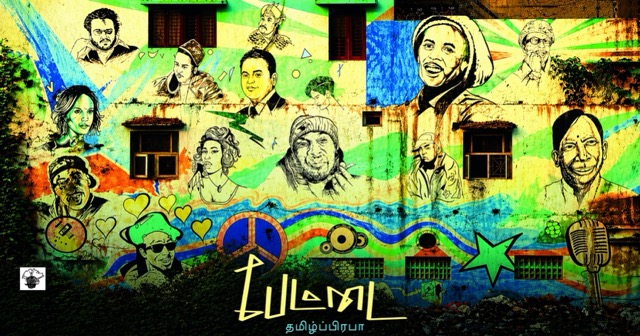
Pettai belongs to this tradition. It tells the story of a particular place, and through that telling it reveals the layered social history of Madras, above all the lived experience of the people of North Chennai.
To understand the world of Pettai, it helps to grasp the unusual formation of Madras as a modern city. Many cities in Tamil Nadu derive their identity from temple-centered civilizations or from their roles as capitals of royal dynasties. Madurai grew around the Meenakshi Amman Temple and the Pandya court; Thanjavur flourished under the Cholas; Kanchipuram emerged through religious institutions and long-standing traditions of learning. These cities took shape gradually, over centuries, through organic social evolution.
Madras followed an entirely different path. It was not an ancient Tamil city formed through temple economies or royal patronage. It was one of the earliest modern colonial cities in India, deliberately established to serve the commercial interests of the British East India Company. That origin profoundly shaped its social identity. Madras became a city where identity was defined not by lineage or sacred geography, but by participation in commerce, labor, and adaptation.
Before the British established Fort St. George in 1639, the Coromandel Coast was home to Tamil communities whose livelihoods centered on fishing and agriculture. Villages such as Mylapore, Triplicane, Egmore, Nungambakkam, and Purasawalkam existed as small settlements connected through coastal trade routes, temple networks, and agrarian landscapes. Their world was shaped by the rhythms of the sea and the monsoon.
The arrival of the East India Company disrupted that balance. With the establishment of Fort St. George, Madras quickly became a key node in the global textile economy. The British reorganized the region according to the logic of colonial administration: Europeans lived within the fortified enclave known as the “White Town,” while Indian merchants, artisans, and laborers were pushed into the “Black Town.” This division was not merely architectural. It reflected the hierarchies of colonial power and the mechanisms of economic control.
As the port expanded, Madras began attracting migrants from across the subcontinent. Telugu-speaking merchants and officials wielded significant influence in early administration and trade. Armenian traders arrived through commercial networks linking Persia and Europe. Christian families of Portuguese descent established communities along the coast. Anglo-Indians emerged as a distinct social group within the colonial administrative structure. Muslim trading families contributed to maritime commerce, and later, Marwari and Gujarati merchants became integral to the city’s economic life. The natives of Madras were not defined by birth, but by their ability to adapt. People belonged to the city not because their ancestors had always lived there, but because they learned to navigate its economic systems and social complexities.
CHINTADRIPET: A HISTORY OF LOOMS
Within this broader historical frame emerges Chintadripet, the neighborhood at the heart of the novel. Its origins lie in the textile trade that flourished under colonial rule. Indian cotton fabrics, especially the calicoes produced along the Coromandel Coast, were in high demand in European markets. To meet that demand, the colonial administration required weaving communities capable of producing textiles at scale for export. Dubashes, who mediated between European merchants and Indian weavers, played a crucial role in organizing this system.
One such figure, Moorthiyappa Chettiar, facilitated the migration of weaving families from Kanchipuram to areas near the Madras port. Seventeen weaving families relocated and established a settlement where they could continue their craft. This settlement came to be known as Chinna Thari Pettai—Small Loom Quarter—which gradually contracted into Chintadripet. Located along the Cooum River, the area had access to the water necessary for dyeing and washing textiles.
During a period when corruption among officials like James Macrae destabilized Madras’s commercial environment, local merchants such as Kalasai Chettiar and Sungu Ramar rose to prominence. Ramar Thottam, situated near the Cooum River and the Karaneeswari Temple, becomes a central locus in the novel. In 1719, when it was discovered that the land had been granted without proper authorization from the Calcutta administration, orders were issued to evict its residents. Faced with losing the land he had built and sustained, Sungu Ramar took his own life—a stark illustration of the vulnerability of local actors under colonial authority.
Over time, this weaving settlement grew into a dense urban neighborhood structured by occupational and caste-based networks. The Cooum River gradually became polluted from the waste generated by the textile industry. Industrialization and urban expansion transformed what was once a natural landscape into a degraded environment. Twentieth-century urban planning further reshaped the area. Settlements near the Central Jail were deemed inappropriate, and in 1967, the Tamil Nadu government provided housing along the banks of the Cooum for slum-dwelling communities. These layered transformations form the lived terrain of the novel’s characters.
LIVES AND CONFLICTS OF THE CHARACTERS
At the center of Pettai, characters like Ruben, Soumiyan, and Balan from Ramar Thottam embody the divergent trajectories of North Chennai’s working class between the nineteen-eighties and two thousands. The novel opens with figures from the older generation, Kiliyamba and Singappooran, before moving into the world of Regina and Gunaseelan’s family. Among them, Nagomiyamma, the grandmother, stands out as a compelling presence: the storyteller who carries forward the history of Kiliyamba, a woman shaped by a dada past, that particular North Chennai tradition of the strongwoman entangled with gang life.
Within the social landscape of Ramar Thottam, religion does not function merely as ritual; it emerges as a powerful force intertwined with livelihood and existential security. The novel carefully traces how Christianity gains strength among the slum-dwelling communities of the area: not as the advance of doctrine but as an alternative cultural framework, a source of social recognition. Figures like Pastor Moses, who migrates from Madurai, approach the spread of faith among the economically marginalized not simply as evangelism but as rescue. For people living on the edge of survival, the church is not just a place of worship; it becomes a space of spiritual consolation and, equally important, a site where they are recognized as part of a collective community.
Regina’s story reveals the psychological depth behind this religious turn with striking clarity. Struggling under the weight of hardship and mental distress, she comes to believe completely that it is through intense prayer that she has been restored. This belief generates in her a profound sense of indebtedness, and as an expression of that gratitude she vows to dedicate her only son, Ruben, to religious service. Even when she receives something as material as a Housing Board home, she does not interpret it as the result of her labor or a government scheme, but as the outcome of divine grace made possible through prayer.
Such beliefs function as emotional anchors for people living in conditions of social insecurity, a way of holding themselves together amid the weight of everyday suffering. More than rational explanations, an intense faith in miracles allows them to preserve a sense of hope. Yet the novel does not stop there. It traces, with remarkable depth, how this very faith later transforms into an irreconcilable philosophical conflict and emotional rupture between Ruben, who moves toward rationalism, and Regina, who remains rooted in spiritual conviction.
A novel must draw the reader into its terrain and make them live alongside its people. One of the great achievements of Pettai is precisely that: the characters seem to move before our eyes; their pain brings us to tears, and their moments of joy provoke unguarded laughter. The elderly figures in the family, in particular, speak with a childlike spontaneity and an unfiltered innocence that often produces unexpected humor. Nagomiyamma blurts out whatever rises within her, sometimes sharp or inappropriate words, and just as quickly apologizes for them. That candidness lends her character a distinctive charm.
A brief exchange from a church setting captures this beautifully:
“Why not cast him as Jesus, ma’am? They’re saying he’s causing nothing but trouble at home.”“Grandma, he’s not tall enough to play Jesus.”“How does anyone even know how tall Jesus was? My boy can deliver the lines well enough…”
Ruben, Regina’s son, chooses a path that stands in direct opposition to his mother’s worldview. Influenced by Periyar’s rationalist philosophy, he embraces atheism. This creates a deep fracture in their relationship. Through this intimate familial conflict, the novel reflects a much larger tension within Tamil society: the ongoing clash between rationalist politics and religious belief.
THE CULTURE OF NORTH CHENNAI: CARROM
In the landscape of North Chennai, streets function not merely as passageways but as cultural arenas—spaces where identity is performed and skill is tested. The novel captures, with remarkable precision, how carrom board culture among working-class youth transcends mere recreation to become a marker of social standing and a matter of pride. Carrom boards set up under trees or in narrow lanes become gathering points where young men momentarily escape the pressures of labor and the constraints of their everyday lives. Board rooms in areas like Washermanpet and Vyasarpadi operate as informal institutions, showcasing not only technical skill but also camaraderie and competitive spirit. It is never just the four players seated at the board; the surrounding crowd, watching intently, participates emotionally in every move. This shared intensity produces a sense of authority among the players and a deep pride in their craft.
The character of Balan emerges as an authentic product of this environment. Growing up amid the polluted banks of the Cooum, within the harsh realities of hunger and slum life, he nonetheless possesses an extraordinary talent for carrom. The speed and precision in his fingers open up a different world for him, elevating him beyond the identity of a boy from the margins into that of a recognized player. The game offers not just distraction but a form of release. In the black-and-white geometry of the board, players momentarily forget hunger, unemployment, and hardship, forging instead a shared sense of belonging. Victory in a board room turns a player into a local hero, and these small triumphs provide the emotional fuel necessary to endure a difficult life. In the novel, carrom is not simply a game—it is a lived experience.
One of the most poignant and contemporary strands in the novel is the decline of the painter Boopalan. For decades, artists like him adorned Tamil Nadu’s cinema halls and political stages with massive cutouts and hand-painted banners, their exaggerated visual style once forming a distinct cultural identity. But the arrival of digital technology renders his craft obsolete. Displaced by this shift, Boopalan is forced into work as an A.T.M. security guard. His trajectory resembles that of a farmer pushed off his land to the city’s margins, or a once-prosperous individual reduced to guarding apartment complexes. From an income of eight thousand rupees, the contracting agency itself siphons off three thousand under the guise of commission—an unvarnished display of the brutality of modern corporate feudalism. The novel exposes this chain of exploitation with force, showing how those already on the margins are pushed further into precarity.
Through the character of Lawrence, the novel lays bare the unethical political economy of private healthcare. A central government employee, Lawrence is not treated as a human being but as a financial opportunity, his insurance coverage becoming the object of predatory attention. His death reveals a disturbing truth: more devastating than disease itself is the fear manufactured by private hospitals, and the financial machinery that feeds on that fear. After exhausting thirty-eight lakh rupees, the system ultimately returns only a body. If Boopalan is betrayed by technology, Lawrence is undone by the intertwined systems of insurance and medical profiteering—together forming a stark indictment of the moral collapse of contemporary society.
VIOLENCE AND REDEMPTION
In marginalized communities, violence is never just a matter of law and order; it is deeply entangled with lived realities, hierarchies of power, and distorted notions of honor. The cycles of conflict among Irudhayaraj, Jana, and Rajini Siva stand as a stark illustration of how revenge becomes a self-perpetuating force that consumes entire lives. Jana’s killing in a moment of rage is not an isolated act—it marks the beginning of a blood feud that stretches across decades.
Irudhayaraj, in particular, is drawn with great subtlety. Unable to bear the weight of his crime, driven by guilt, he turns to Christianity seeking refuge. He believes that confession and prayer can cleanse his past and allow him to begin anew. But while religion may offer inner consolation, the violence he has unleashed continues to exist outside him, waiting to claim its due.
His murder on the Egmore bridge becomes a chilling reminder that violence never forgives; it simply waits for its moment. The hunter, in time, becomes the hunted. With the entry of shadowy figures like Rajini Siva, personal vengeance escalates into collective conflict. Even Rajini Siva’s death, followed by further killings, reinforces a brutal truth: violence has no resolution; it only multiplies itself.
These conflicts also reveal the intensity of social proximity in such communities. When lives are tightly interwoven, even minor insults or injuries can ignite widespread retaliation. In such contexts, informal street justice often overrides institutional law. Through these episodes, Pettai exposes the darker underside of North Chennai, showing how deeply people are trapped within structural pressures, and how neither philosophy nor religion alone is sufficient to offer escape.
HUMAN ATTACHMENT AND COMPASSION
As the novel moves toward its conclusion, Ruben’s inner turmoil and psychological breakdown transcend the suffering of an individual—they become an expression of collective trauma. The successive deaths of his close friend and the friend’s father leave deep scars within him, pushing him into an unresolved mental collapse. Through Ruben’s fractured state, the novel reveals that death is not merely a physical event; it is an upheaval that ravages the inner worlds of those who remain.
Yet, within this darkness, a quiet light persists—the unwavering love and patience of his friends. Ruben’s admission into a mental health institution and his gradual return to ordinary life are not framed as medical miracles, but as the result of human solidarity. It is through the care, endurance, and presence of others that he is able to recover. The novel insists on a simple but profound truth: when a person is held by relationships and friendship, even the deepest abyss is not final.
This enduring compassion, this capacity to care for one another, is what continues to sustain human life in a world marked by exploitation and violence. For characters like Ruben, who stand as representatives of the exploited class, the alienation and inequality they face can only be counterbalanced through mutual love. That, ultimately, is the novel’s most powerful political vision.
LANGUAGE AND GLOBAL PARALLELS
Much like the dialect that emerged from London’s East End, Madras Bashai is a hybrid language—formed through the intermingling of Tamil, Telugu, Urdu, and English. It is not a “corrupt” or inferior form of speech, but an expression of urban adaptability. For years, Tamil literary culture largely ignored this living language of the city. Pettai performs an essential intervention by bringing this vibrant, street-born idiom into the literary record.
Just as Trevor Noah’s Born a Crime documents the social realities of apartheid-era South Africa through personal memory, Pettai captures the lived world of North Chennai through intimate storytelling. Across both works, one finds shared themes—poverty, violence, and the persistent human desire to endure and transcend. If literature is, as the saying goes, a conversation across time, then this comparison proves it. The significance of Pettai lies in its transformation of a neglected geography into a literary landscape. By rendering the voices, dialects, and lived experiences of North Chennai’s people, the novel records a part of the city that remains invisible in official histories. It reminds us that cities are not built merely through commerce or governance; their true identity emerges from the everyday struggles and aspirations of ordinary people.
In Born a Crime, there is a moment when Trevor’s mother is shot and fights for her life. Trevor spends everything he has earned through his own labor on her medical treatment. The novel captures a recurring anguish: why is it that every time an ordinary person begins to climb out of economic hardship, an unexpected tragedy drags them back? This cycle is not merely about financial loss—it is about a deeper, lifelong burden imposed by the conditions into which people are born.
A similar sense of cyclical inevitability lingers after finishing Pettai. What remains is not just the memory of events, but the weight of repetition—the feeling that lives, despite all resistance, are pulled back into the same structures of suffering.